


Premium Grade office space achieved rentals of R565/m² (USD: 30.55/m²) during November 2026, with available stock currently at 20 m². This segment continues to reflect demand for high-quality commercial property.
A Grade office space achieved rentals of R100/m² (USD: 29.30/m²), with current stock availability of 5 316 m². The sector continues to offer competitive commercial property at more accessible rental levels.
Rental figures exclude VAT.

Retail space achieved rentals of R442 - R442/m² (USD: 23.91 - 23.91/m²) during November 2026, with available stock currently at 78 m². This segment continues to reflect demand for high-quality retail property.
Market Activity retail space continues to show steady demand across key nodes, with availability levels reflecting ongoing tenant movement and consistent absorption within the sector.
Rental figures exclude VAT.

Industrial space is not currently recorded in this area, as the node is classified as non-industrial with no active supply or rental activity during November 2026.
Market Activity this area shows no industrial market presence at present, with no recorded logistics, warehousing, or manufacturing stock available for analysis in this period.
Office and Commercial Space in Stellenbosch: What Tenants Need to Know.
Stellenbosch sits approximately 50 km east of Cape Town along the N2 and R44, in the heart of the Cape Winelands. The Cape Winelands Airport, located adjacent to the N1 near Muldersvlei, broke ground in 2026 with its first phase scheduled to open in 2027, which will substantially improve regional air connectivity and reduce travel time for businesses operating between Stellenbosch, Cape Town and national destinations. For businesses assessing Stellenbosch as a base, the combination of the R44 and N2 highway access, the existing Metrorail connection to Cape Town, and the incoming airport all contribute to a connectivity picture that has improved materially in recent years.
In Stellenbosch Central, A-grade office space ranges from R220 per square meter, while more affordable office options start from approximately R190 per month for small units. In Technopark, commercial office rental rates range from approximately R91 to R135 per square meter for functional A-grade space, rising to R200 per square meter for AAA-grade suites at Octo Place on Elektron Road.
This makes Technopark one of the most competitively priced dedicated business precincts in the Western Cape relative to its specification standard, and it explains why a broad range of national and international businesses have chosen to base operations there. Technopark is well known as a hub for businesses spanning finance, information technology, agriculture and research, with Experian, one of the world's leading data analytics companies, among the most prominent tenants operating from the precinct.
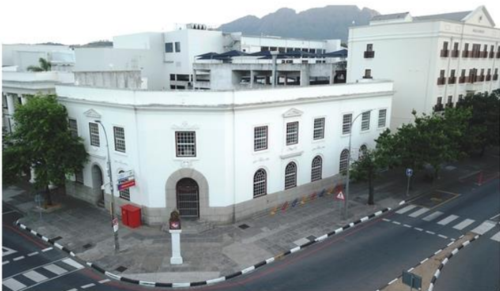
For businesses that want a central Stellenbosch address with character, the CBD and historic core around Dorp Street and Church Street offer a range of commercial spaces in heritage buildings alongside modern mixed-use developments, with street-facing retail and professional office accommodation available across a range of sizes from boutique single-practitioner units to larger multi-floor layouts.
The Stellenbosch Investment Case: What Landlords and Investors Should Know
Stellenbosch is one of South Africa's most consistently performing property investment markets and one of the Western Cape's most active commercial investment destinations. The fundamentals here are driven by structural demand, a world-class university, a growing technology and innovation sector, consistent semigration from other provinces, and a development pipeline of national significance.
Stellenbosch's property vacancy rate sits at just 2% to 4%, one of the lowest in the Western Cape, which means landlords can expect consistent tenant demand and limited void periods. Stellenbosch property prices grew approximately 9% in 2025, roughly double the national average, supported by persistent university-driven demand, limited land for new development and ongoing semigration into the Western Cape. For commercial landlords, this residential market performance is a direct indicator of the broader demand conditions that sustain commercial occupancy and rental growth in the town.
The most significant development signal in the Stellenbosch market is The Bridge. Situated in Muldersvlei within the expanding town of Stellenbosch, The Bridge is a 340-hectare mixed-use development strategically positioned between Cape Town, Paarl and the Stellenbosch Winelands, adjacent to the N1. It integrates residential, commercial, educational, retail and leisure spaces across a multi-precinct development that includes a 30-hectare innovation precinct to be established in partnership with Stellenbosch University.
Stellenbosch is one of the Western Cape's established commercial, academic and agricultural centres, situated in the Cape Winelands approximately 50 kilometres from Cape Town. The town has developed a diverse commercial property market supported by financial services, technology businesses, research institutions, tourism, agriculture, retail and professional services.
See all Office Space to Rent in Stellenbosch
Unlike Cape Town's major metropolitan office districts, Stellenbosch combines a historic town centre with dedicated business parks, corporate office developments, industrial areas and newer mixed-use precincts. Its commercial activity extends from the traditional central business district to Techno Park, the R44 corridor, Devonbosch and the surrounding industrial areas.
The presence of Stellenbosch University, established investment businesses, technology companies and agricultural enterprises contributes to demand for different types of commercial accommodation. The town also supports a substantial retail and hospitality sector serving residents, students, businesses and visitors. This Stellenbosch Area Profile provides an overview of the local commercial property market, principal business precincts, transport infrastructure, important buildings, retail activity and considerations for commercial tenants, landlords and investors.
Stellenbosch is situated in the Cape Winelands region of the Western Cape, east of Cape Town and north of Somerset West. The town lies within Stellenbosch Local Municipality, which also encompasses surrounding communities and agricultural areas. The R44 is one of the area's principal routes, connecting Stellenbosch with Somerset West to the south and the N1 corridor to the north. The R304 connects the town with the N1, while the R310, commonly known as Baden Powell Drive, provides another connection towards Cape Town and the N2.
Adam Tas Road, Dorp Street, Bird Street, Merriman Avenue, Alexander Street and surrounding roads form part of the local commercial and transport network. Stellenbosch's position within the Cape Winelands also connects businesses with surrounding agricultural and tourism areas, including Paarl, Franschhoek, Wellington and the wider Stellenbosch wine region.
Search all offices to rent in Stellenbosch
Commercial activity is distributed across several distinct precincts. The historic town centre contains a mixture of retail, professional services and commercial offices, while Techno Park accommodates dedicated corporate and technology-oriented properties. Further commercial development is found along the R44, around Stellenbosch Square and within newer mixed-use developments such as Devonbosch.
Stellenbosch has an established commercial property market with a mixture of corporate offices, business parks, retail centres, mixed-use developments and industrial accommodation. The office market includes traditional commercial buildings in Stellenbosch Central, refurbished office parks, modern corporate premises in Techno Park and newer business accommodation outside the historic town centre.
Building specifications vary across these areas. Older central properties may provide established office accommodation within walking distance of shops and business services, while dedicated office parks typically offer more extensive parking, controlled access and modern building infrastructure.
A distinguishing characteristic of the local market is the relationship between commercial property demand and the town's academic, technology and investment sectors. Businesses operating in financial services, software development, engineering, research and corporate administration contribute to demand for quality office accommodation.
The commercial market also benefits from agriculture-related enterprises, food production businesses, tourism operators and service providers supporting the wider Cape Winelands economy. For landlords and investors, building location, accessibility, tenant demand, operating expenditure and property condition are important considerations when assessing the performance of commercial assets.
Stellenbosch has evolved from a historic agricultural and university town into an established regional commercial centre. The traditional central business district developed around streets such as Dorp Street, Church Street, Bird Street and Andringa Street, where retail, hospitality and professional services continue to form an important part of the local economy.
As the town's commercial activities expanded, additional business accommodation developed outside the historic centre. Techno Park emerged as a dedicated business precinct intended to accommodate technology-oriented and research-related enterprises. Over time, the development has attracted a broader range of corporate and professional businesses.
Commercial growth along the R44 has created additional locations for businesses requiring convenient regional access and parking. More recently, developments such as Devonbosch have introduced mixed-use commercial environments combining offices, residential accommodation and supporting lifestyle facilities.
The municipality has also identified the Adam Tas Corridor as an important area for future urban development and economic activity. These different phases of development have created a commercial property market with a wider range of building types than the historic town centre alone.
Stellenbosch comprises several commercial precincts, each with its own building characteristics, tenant profile and access arrangements. Stellenbosch Central: The traditional commercial heart of the town, including Dorp Street, Church Street, Bird Street, Andringa Street and surrounding roads. This area accommodates banks, professional services businesses, retailers, restaurants, hotels and mixed-use properties. Buildings in the central area appeal to occupiers requiring proximity to established business services and the university.
Techno Park: A dedicated commercial district situated to the south of the town centre, with access from the R44. The precinct contains established corporate office buildings, technology-oriented businesses, research-related enterprises and modern commercial developments. It is one of Stellenbosch's principal office-park environments.
Adam Tas Road and the Station Precinct: This commercial and transport corridor connects parts of the central business district with surrounding industrial and mixed-use areas. Its proximity to Stellenbosch railway station and established road infrastructure makes it relevant to commercial property planning and urban redevelopment.
Devonbosch and the R304 Corridor: Located outside the traditional town centre, Devonbosch represents a newer form of mixed-use development combining commercial offices with residential and supporting facilities. Its position along the R304 and Bottelary Road corridor gives the precinct a different character from central Stellenbosch.
The R44 and Stellenbosch Square Area: The R44 corridor accommodates retail facilities, service businesses and commercial developments serving both Stellenbosch and Somerset West. Stellenbosch Square provides a substantial neighbourhood retail offering along this route.
Brandwacht and the Southern Commercial Areas: Commercial accommodation in and around Brandwacht includes office parks, professional services properties and supporting retail facilities. This part of Stellenbosch provides an alternative to the more concentrated central business district.
Plankenbrug Industrial Area: One of Stellenbosch's established industrial districts, accommodating manufacturing, warehousing, workshops and businesses requiring industrial premises. The area serves a different occupier market from Techno Park and the town's corporate office developments.
Agricultural and Rural Commercial Areas: The surrounding Stellenbosch region contains working farms, wineries, hospitality businesses and agricultural enterprises. These activities contribute to the wider commercial economy, although land-use rights and property requirements differ substantially from those of conventional urban commercial properties.
The distinction between these precincts is important when assessing commercial property, as building specifications, accessibility and surrounding facilities vary considerably.
Stellenbosch has an established office market supported by the concentration of technology companies, financial services businesses, research organisations and professional practices. Techno Park is particularly important to this market. The precinct was developed as a specialised technology and science business environment and has subsequently accommodated a broader range of commercial occupiers.
Its office buildings generally provide a different working environment from the historic town centre, with dedicated parking, larger sites and modern commercial infrastructure. The central Stellenbosch office market is more closely connected to the town's traditional business district. Commercial properties around Dorp Street and surrounding roads provide accommodation for firms that value proximity to banks, restaurants, professional services and the university.
Newer mixed-use developments offer additional alternatives, particularly for businesses interested in modern buildings and access to supporting amenities. Stellenbosch's relationship with the technology and research sectors makes reliable fibre connectivity, backup electricity, building security and adaptable office layouts important commercial considerations. Occupiers should assess these features at individual-building level, as specifications differ substantially between older office accommodation and newer developments.
Stellenbosch University plays a significant role in the town's economic and commercial environment. The university supports employment, research activity, business services, student accommodation, hospitality and demand for local retail facilities. Its academic departments and research programmes also contribute to relationships between businesses, researchers and professional organisations. Technology enterprises, consulting companies and specialist service providers can benefit from access to graduates, research expertise and the wider professional community.
The university's presence is particularly relevant to businesses involved in education, software, engineering, agricultural technology, financial services and research-related activities. Commercial property demand associated with this environment is not limited to conventional office accommodation. It also includes hospitality premises, retail units, specialist facilities, supporting services and properties serving the student and residential population. For landlords, the university's influence is an important part of the wider demand environment, although its presence does not guarantee demand for every type of commercial property.
Stellenbosch accommodates a diverse business community extending beyond its traditional agricultural and tourism sectors. Financial services, investment management and professional advisory businesses form an important component of the office market. Technology and software businesses also contribute to commercial demand, supported by the university, established business networks and dedicated commercial precincts such as Techno Park. Engineering, research and specialist consulting businesses operate within the wider Stellenbosch economy.
Agriculture and the wine industry remain important commercial sectors, supporting activities such as food production, packaging, agricultural technology, logistics, hospitality and export-related services. Retail and tourism businesses provide another substantial component of the local economy, particularly within the historic town centre and surrounding visitor destinations. Healthcare, education and general professional services also support the commercial property market.
This combination of industries creates demand for different forms of accommodation, from smaller professional offices and customer-facing retail premises to larger corporate properties and industrial facilities.
Stellenbosch has an established retail market supported by residents, students, office workers and visitors to the Cape Winelands. The historic town centre provides a mixture of street-facing shops, restaurants, cafés, specialist retailers, banks and service businesses. Church Street, Dorp Street, Andringa Street and Bird Street are among the streets associated with central retail and hospitality activity.
Eikestad Mall is an important commercial property within Stellenbosch Central, providing a combination of national retailers, supermarkets, restaurants, services and supporting commercial accommodation. The mall's location in the town centre contributes to pedestrian activity and the concentration of retail facilities around surrounding streets. Stellenbosch Square is another established retail destination, situated along the R44 near Webersvalley Road. The centre provides grocery shopping, restaurants, services and other everyday retail facilities. Retail Space to let in Stellenbosch.
Smaller neighbourhood retail developments serve residential areas outside the central business district. The suitability of retail premises varies according to customer demand, location, visibility, trading conditions and the nature of the business. Properties within the historic town centre may offer direct pedestrian exposure, while suburban shopping centres generally provide managed retail environments with dedicated parking. For landlords, retail property performance depends on tenant mix, lease structures, operating costs and the ability of individual premises to attract customers.
Although Stellenbosch is primarily associated with offices, retail, tourism and the university, its commercial economy also includes industrial and manufacturing activities. The Plankenbrug area is one of the town's established industrial locations, accommodating workshops, warehousing, manufacturing businesses and related commercial activities.
Industrial properties in Stellenbosch serve the local economy as well as businesses operating across the Cape Winelands. Agriculture-related businesses, food production, distribution and service operations contribute to demand for industrial accommodation. The requirements of industrial occupiers differ from those of conventional office tenants. Important considerations include access for delivery vehicles, electrical capacity, floor loading, yard space, building height and permitted use.
Businesses with substantial logistics or distribution requirements should also assess access to the R44, R304, N1 and N2 corridors.Stellenbosch's industrial property market should be viewed separately from Techno Park, which is primarily a specialised commercial office and business precinct.
Stellenbosch is connected to the surrounding Western Cape, Somerset West area through several major regional roads. The R44 connects the town with Somerset West and the N1, providing access to nearby commercial and residential areas. The R304 offers another connection to the N1, while Baden Powell Drive provides a route towards the N2 and the wider Cape Town metropolitan area.
Adam Tas Road and Merriman Avenue are important components of the town's internal road network. Stellenbosch railway station provides a connection to the regional rail system, while minibus taxis and bus services support movement between the town and surrounding communities. Service availability and reliability should be confirmed when assessing commuting arrangements. Access arrangements differ between the historic CBD and newer office-park developments.
Central commercial properties may benefit from pedestrian access to restaurants, banking facilities and other services, but parking can be more constrained. Developments outside the town centre often provide dedicated parking areas, although this can increase dependence on private vehicles. Businesses with larger employee populations should consider travel patterns, parking availability and peak-period congestion when assessing commercial locations.
Stellenbosch's historic character is an important factor in its commercial property market. Parts of the central business district contain older buildings and streetscapes that are subject to heritage considerations and development controls. Commercial property owners planning alterations, extensions or changes of use may need to consider municipal planning requirements and heritage approvals.
The Stellenbosch Municipality's spatial planning framework guides development in the town and surrounding areas. The Adam Tas Corridor has been identified as a strategic development area, with planning proposals aimed at creating a more integrated urban environment. Techno Park also has a distinct planning history associated with its specialised technology and science-park purpose. For investors and developers, the existence of commercial activity in a particular area should not be taken as confirmation that all business uses are permitted. Land-use zoning, title conditions, heritage restrictions and applicable approvals should be verified for each property before redevelopment or occupation.
Stellenbosch has an established commercial investment market comprising office buildings, retail properties, mixed-use developments, sectional-title commercial units and selected industrial assets. The town's economic diversity and role as a regional business centre are relevant considerations for commercial property investors.
However, asset performance varies according to location, building condition, lease agreements, operating expenditure and tenant demand. The historic CBD and Techno Park represent different investment environments. Central commercial properties may benefit from proximity to established retail and professional services, while properties in dedicated business parks can offer modern infrastructure and larger floor areas. Investors considering older buildings should assess maintenance requirements, energy efficiency, heritage obligations and the cost of adapting premises for modern business use.
For sectional-title commercial property, body corporate management, levies, maintenance reserves and common-property obligations should be reviewed. Mixed-use developments require additional consideration of the relationship between commercial, residential and shared facilities. The financial strength of tenants, lease expiry profiles and vacancy exposure remain important determinants of commercial property value.
Commercial property occupiers in Stellenbosch increasingly assess buildings according to infrastructure reliability and operating efficiency. Important considerations include fibre connectivity, backup electricity, water supply, security, air-conditioning and the condition of internal office installations. Modern office developments may incorporate more efficient lighting, air-conditioning and building management systems.
Some properties also provide solar installations, generators or alternative electricity arrangements. However, these features should be confirmed individually rather than assumed from the building's grade or location. Newer mixed-use developments may integrate commercial accommodation with shared amenities and landscaped facilities. For landlords, infrastructure improvements can contribute to tenant retention and building competitiveness, provided the capital expenditure is commercially justified. For tenants, the total cost of occupation should include both the rental obligation and the operating expenses associated with utilities, parking and building services.
Stellenbosch has a substantial hospitality sector that supports its wider commercial economy. The historic town centre contains hotels, guesthouses, restaurants, coffee shops and conference facilities used by businesses, residents and visitors. The surrounding wine region provides additional hospitality, event and meeting venues, many of which support corporate functions and business tourism.
These facilities are relevant to companies that regularly host clients, conferences, training sessions or visiting employees. The town also provides access to retail facilities, healthcare services, banks, gyms and other everyday amenities. Stellenbosch University contributes to the availability of educational, cultural and professional facilities.
The relationship between commercial activity and the surrounding lifestyle environment is a distinguishing feature of the Stellenbosch property market. Businesses should nevertheless assess the practicality of individual locations, including access, parking and proximity to employees, rather than relying solely on the broader appeal of the town.
Stellenbosch contains a varied selection of commercial properties, from established office parks in the central business district to modern developments in Techno Park and newer mixed-use precincts. The following buildings represent different forms of commercial accommodation across the Stellenbosch market.
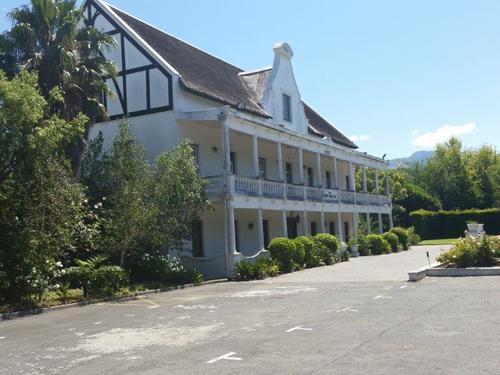
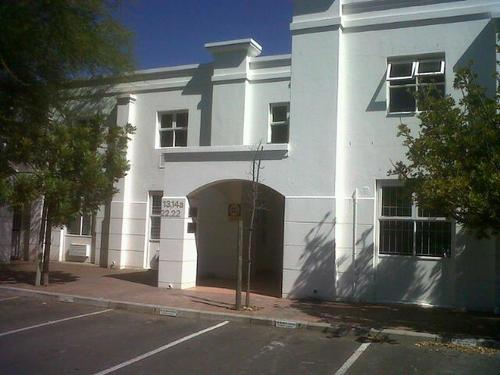
The Vineyards Offices is an established commercial office development on Dorp Street in Stellenbosch Central. The property has undergone refurbishment and partial rebuilding, providing an updated commercial environment within reach of the town centre. Its location near Stellenbosch railway station and The Woodmill places occupiers close to public transport connections, retail facilities and other business services.
The development provides secure parking and controlled access, with accommodation suited to a range of professional and corporate businesses. The Vineyards is relevant to organisations seeking an established central Stellenbosch location without occupying a traditional street-facing commercial building.
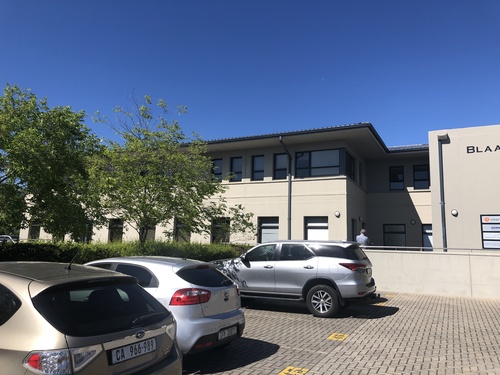
De Wagenweg Office Park is situated on Stellentia Road in Stellenbosch Central and forms part of the town's established office property market. The development provides commercial office accommodation within an office-park environment, with a range of premises configurations. Its location gives businesses access to the surrounding town centre, major roads and supporting commercial facilities.
De Wagenweg accommodates professional services and corporate users who require dedicated office accommodation while remaining close to the established commercial district. The property represents the office-park developments that provide an alternative to traditional mixed-use buildings in the Stellenbosch CBD.
15 Elektron Road is a commercial office building within Techno Park, one of Stellenbosch's principal corporate business precincts. The property comprises office accommodation across ground and first-floor levels, with dedicated parking and fibre connectivity. Its location provides access to the R44 and the wider Techno Park commercial environment. The building is relevant to professional practices, technology businesses and other corporate occupiers requiring a dedicated commercial setting outside the central business district. 15 Elektron Road reflects the established office stock within Techno Park, where buildings commonly incorporate parking and infrastructure suited to conventional business operations.
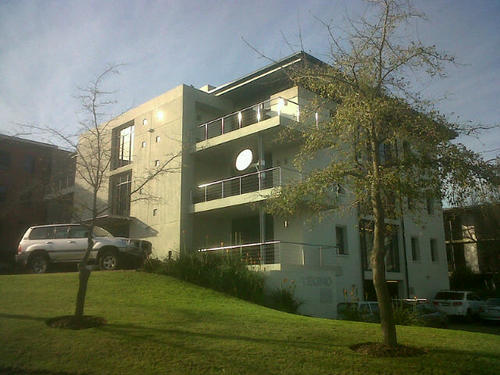
Octo Place is an established sectional-title commercial office development on Electron Road in Techno Park. The property comprises office buildings with fibre connectivity and parking facilities, serving smaller and medium-sized businesses. Its position within Techno Park places occupiers alongside other professional, technology and commercial enterprises. The development includes supporting amenities such as a coffee bar, providing convenience for employees and visitors. Octo Place represents the smaller multi-tenanted and sectional-title commercial developments found within Stellenbosch's technology precinct.
Cap Du Mont is an established commercial office property on Electron Road in Techno Park. The building comprises office accommodation arranged across two levels, with basement and visitor parking. Its position within the business precinct provides access to the R44 and surrounding commercial developments. The property is part of Techno Park's established corporate office stock, offering accommodation in a dedicated business environment. Its setting and access arrangements differ from those of the more pedestrian-oriented properties in Stellenbosch Central.
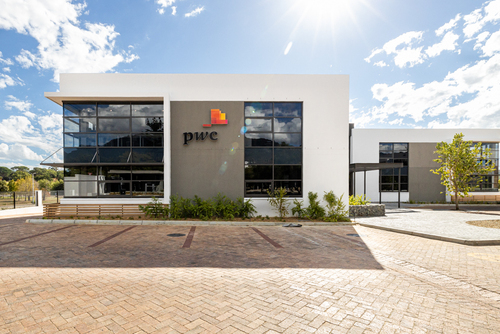
7 Neutron Road is an established corporate office building within Techno Park. The development includes office accommodation with dedicated parking, fibre connectivity and supporting building infrastructure. The property is equipped with backup power systems and provides facilities for businesses requiring a larger commercial footprint. Its location near Techno Drive and the R44 makes it accessible from the surrounding Stellenbosch and Somerset West areas. The building represents the larger corporate properties found within Techno Park and is relevant to organisations requiring multiple offices or consolidated departmental accommodation.
Devonbosch is a mixed-use development situated near the R304 and Bottelary Road corridor outside central Stellenbosch. The precinct combines modern commercial accommodation with residential and supporting lifestyle facilities. Commercial premises are located within a landscaped environment, with access to restaurants, coffee shops, fitness facilities and outdoor amenities. The Residence building forms part of the development's commercial offering, with ground-floor office premises suitable for different business uses, subject to the applicable approvals. Devonbosch represents a newer type of commercial property within the Stellenbosch market, combining office accommodation with surrounding facilities rather than a conventional standalone business park.
Eikestad Mall is one of Stellenbosch's principal mixed-use commercial properties, situated in the town centre around Andringa, Bird and Plein Streets. The development combines a substantial retail component with associated commercial accommodation and services. Mill Square forms part of the wider commercial environment and includes office facilities within walking distance of restaurants, shops, banks and public amenities.
The centre's position in the historic CBD contributes to pedestrian activity and supports the surrounding retail and hospitality market. Eikestad Mall is an important example of mixed-use commercial property in Stellenbosch and differs significantly from the dedicated business parks found in Techno Park.
Stellenbosch provides businesses with a selection of commercial environments, each suited to different operational requirements. Professional firms requiring access to the historic business district may prioritise central office buildings near Dorp Street, Bird Street and surrounding commercial roads. Technology businesses, research-related companies and established corporate occupiers may prefer dedicated commercial properties within Techno Park.
Newer mixed-use developments such as Devonbosch offer another option for businesses considering modern commercial accommodation outside the traditional CBD. Occupiers should assess employee travel patterns, client access, parking, building infrastructure and total occupancy costs before selecting premises. Particular attention should be paid to backup power, connectivity, existing fit-out, lease terms and the availability of suitable accommodation for future expansion. The preferred commercial precinct will depend on the nature of the business, its workforce and the activities conducted from the premises.
Stellenbosch's varied commercial economy provides landlords with access to tenants from financial services, technology, professional services, retail, hospitality and other business sectors. However, demand differs between commercial precincts and property types. Older central buildings may require refurbishment to remain competitive with modern office developments, particularly in relation to electricity infrastructure, connectivity, parking and internal accommodation.
Landlords in Techno Park and other established office precincts should regularly review building presentation, operating costs, security and available tenant facilities. Properties with persistent vacancies may need improvements to internal layouts, asking rentals or the way premises are presented to prospective occupiers. Accurate property descriptions, current photographs, verified floor areas and clear rental information are important in commercial property marketing.
Landlords should also review lease expiry profiles, tenant financial strength, maintenance obligations and future capital expenditure requirements. For mixed-use properties, the management of shared facilities and the relationship between commercial and residential activities may require additional attention. A proactive leasing and property management approach can support tenant retention and reduce vacancy periods.
Stellenbosch is situated in the Cape Winelands region of the Western Cape, approximately 50 kilometres from Cape Town. It is connected to Somerset West, Paarl and the wider metropolitan area through the R44, R304, R310 and surrounding road network.
Yes. Stellenbosch has an established commercial market supported by financial services, technology companies, professional businesses, retail, agriculture, tourism and Stellenbosch University. Commercial activity is distributed across the historic CBD, Techno Park and several newer business precincts.
The market includes corporate office buildings, business parks, sectional-title offices, street-facing retail properties, shopping centres, mixed-use developments, workshops, warehouses and industrial premises.
The principal commercial areas include Stellenbosch Central, Techno Park, the Adam Tas Road corridor, Devonbosch, Brandwacht, the R44 commercial corridor and Plankenbrug Industrial.
Techno Park is an established commercial precinct situated south of Stellenbosch Central near the R44. It was developed with a specialised technology and science-park purpose and contains a range of corporate office buildings and commercial enterprises.
Techno Park is primarily a dedicated office and business precinct with commercial buildings and parking facilities. Stellenbosch Central is a mixed-use town centre containing offices, retail, restaurants, hotels, public facilities and historic buildings.
Major business sectors include financial services, investment management, technology, software development, professional consulting, research, education, agriculture, wine production, tourism, hospitality and retail.
The university supports employment, research, professional services and demand for local retail, hospitality and other commercial facilities. It also contributes to the availability of graduates and specialist skills relevant to technology, engineering and professional businesses.
Stellenbosch has dedicated business parks and larger commercial office buildings capable of accommodating corporate operations. The suitability of the town depends on a company's workforce, clients, transport requirements and preferred commercial environment.
Stellenbosch has a railway station and is served by local bus and minibus taxi services. The accessibility of individual commercial properties varies, and businesses should confirm available routes and current service arrangements.
Eikestad Mall is one of the main retail centres in the historic town centre. Stellenbosch Square, situated along the R44, is another established shopping destination. Additional retail premises are located along Dorp Street, Church Street, Bird Street and surrounding commercial roads.
Stellenbosch has an established commercial investment market, but suitability depends on the individual property's purchase price, rental income, vacancy profile, tenant quality, building condition and operating expenses. Heritage considerations and development restrictions may also affect certain properties.
Yes. Stellenbosch has established industrial areas, including Plankenbrug, which accommodates manufacturing, workshops, warehousing and related commercial activities. Industrial property requirements differ from those of conventional office premises.
The Adam Tas Corridor is an area identified in Stellenbosch Municipality's spatial planning work for urban improvement and future development. Planning objectives include better integration of land uses, transport, public facilities and economic activity.
Stellenbosch is a university and regional commercial centre with strong financial services, technology, agriculture and tourism sectors. Somerset West provides a different commercial market serving the Helderberg residential area and surrounding business communities. Both locations contain office parks, retail centres and commercial premises, but the distribution of industries and major business precincts differs.
Stellenbosch combines an established business community with academic institutions, technology enterprises, financial services, agriculture, retail and tourism. Its commercial property market provides accommodation for these different industries within the wider Cape Winelands economy.
Area information reviewed November 2026. Building specifications, property availability, planning requirements and commercial market conditions are subject to change.

Direct marketing and distribution to our vast broker network.

Securing the best possible terms with new tenants and managing renewals.

Handling the entire process from lease preparation to deposit collection.
Please enter your email address below. Once submitted, you will receive your requested report as an attachment via email.
Call us to discuss your requirements - we're awaiting your call.


Search Knight Frank SA: You can't beat local passion backed by global support.


